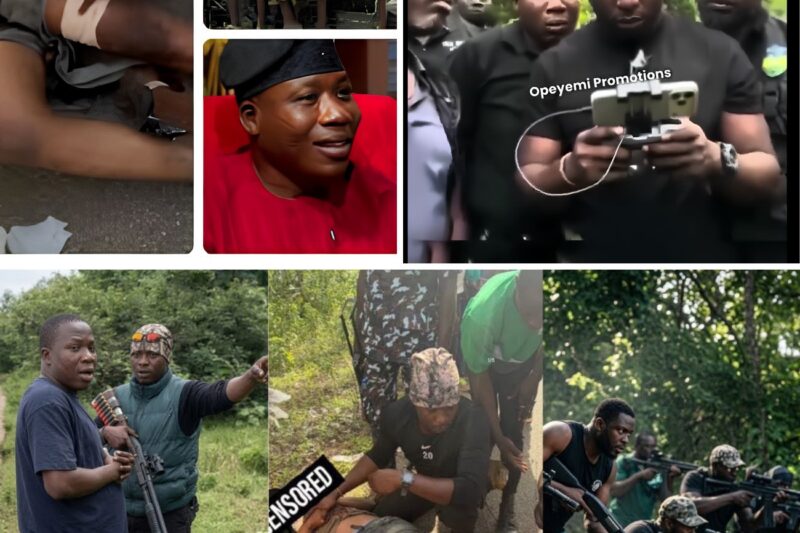
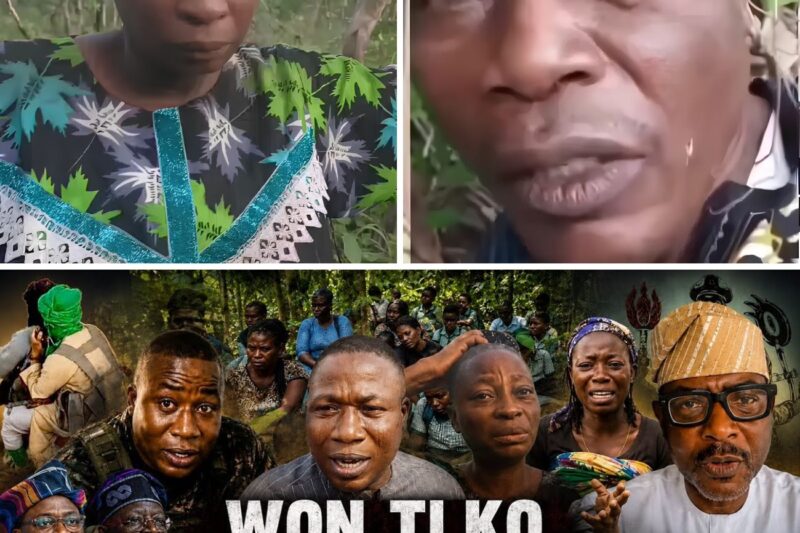
# Oyo Forest Ambush: Sunday Igboho’s Iru Ekun Team Faces Heavy Fire During Rescue Push for Kidnapped Victims  The fear surrounding the forests of Oyo State has taken another dramatic turn after reports emerged that members of Sunday Igboho’s Iru Ekun security team were attacked during an operation inside the Old Oyo National Park. For many Nigerians, this was not just another security story. It touched a deeper wound: the pain of parents still waiting for abducted children, the growing fear of forest hideouts, and the question many people are now asking openly — who really controls these dangerous spaces?  According to reports, several members of Iru Ekun, a private security outfit linked to Yoruba Nation campaigner Sunday Adeyemo, popularly known as Sunday Igboho, were injured after suspected armed criminals allegedly ambushed them during an operation in the Old Oyo National Park. Vanguard reported that the team had gone into the forest to track suspected kidnappers and other armed groups believed to be operating in the reserve.  The operation reportedly became tense after the team advanced into a location suspected to be used as a hideout. Sources cited by Vanguard claimed the operatives had deployed surveillance drones to monitor movements before moving deeper into the area. But what was supposed to be a search operation allegedly turned into a frightening exchange after the armed men opened fire.  Premium Times also reported that the confrontation happened during a surveillance mission by Iru Ekun operatives in a part of the Old Oyo National Park believed to have been used by armed groups. In a video message later circulated online, Sunday Igboho said he was safe and insisted that the attack would not stop the group’s anti-kidnapping operations.  For people following the matter closely, the timing of this ambush is what makes the story even more emotional. Oyo State has been under serious public attention since more than 40 schoolchildren and teachers were abducted from schools in Oriire Local Government Area on May 15, 2026. Premium Times reported that the victims were still in captivity as of its June 29 update, a situation that has kept families, communities and Nigerians across the country in deep anxiety.  The pain of those families cannot be reduced to statistics. Behind every number is a child, a teacher, a mother who cannot sleep, a father who checks his phone every minute, and a community living with the heavy fear that the forest has swallowed their people. This is why many Nigerians reacted strongly when reports surfaced that Sunday Igboho’s men had entered the forest in connection with anti-kidnapping operations.  But this story also comes with many sensitive angles. While some online accounts claimed that bullets struck some Iru Ekun members without penetrating their bodies, such claims remain part of social media discussion and should not be treated as confirmed fact. In a country where spiritual protection, local charms and traditional security beliefs are often discussed openly, stories like this can quickly become viral. However, the most important confirmed concern remains the reported attack, the injuries and the urgent need to rescue abducted victims safely.  Sunday Igboho, in his public update, reportedly dismissed rumours about his own condition and said injured members had recovered. Vanguard quoted him as reassuring supporters that he was safe, while also saying the group would not relent in efforts against those disturbing peace in the region.  For many Yoruba communities, Igboho’s return to forest security matters has reopened old debates. Some supporters see him as a bold local defender who is willing to go where many fear to enter. Others worry about the danger of private security operations, especially when forests are occupied by different groups, including innocent settlers, herders, farmers and criminal elements. This is where the matter becomes delicate: security operations must target criminals, not ethnic groups.  That point is important. Nigeria’s security crisis is already complicated by ethnic tension, political mistrust and fear. If the fight against kidnapping becomes a fight against ordinary people because of their background, it could create more problems than it solves. But if criminals are allowed to use forests freely, rural communities will continue to suffer. The challenge is to separate innocent residents from armed gangs, and that requires intelligence, coordination and lawful action.  The Old Oyo National Park has now become more than a forest in public imagination. It has become a symbol of Nigeria’s wider struggle with insecurity. When kidnappers can hide in remote areas, move victims through thick bush paths and challenge security operatives, ordinary citizens begin to ask whether the state still has full control of its territory.  This is why the reported ambush of Iru Ekun has drawn so much attention. It suggests that the people hiding in these forests may not be small criminals acting carelessly. Reports described them as heavily armed, and the alleged exchange of fire shows the level of danger faced by anyone entering those areas. Vanguard reported that efforts to reach the Oyo State Police Command for reaction were unsuccessful at the time of its earlier report.  For the families of abducted children and teachers, however, arguments on social media may not matter much right now. What they want is simple: they want their loved ones back alive. They want the government, police, military, local security networks and community leaders to work together with urgency. Every passing day increases fear, trauma and public anger.  The story has also raised questions about the role of local security groups in Nigeria. In many communities, people no longer wait passively for Abuja or state capitals to act. Hunters, vigilantes, forest guards and local networks have become part of the security conversation. Some see this as necessary because local people understand the terrain better. Others fear it could lead to confusion if not properly regulated.  What is clear is that Oyo State’s forest crisis needs more than viral videos and emotional arguments. It needs coordinated intelligence, technology, trusted local information, professional security response and a strong rescue strategy. Drones may help locate movement, but rescue operations require planning, discipline and official coordination.  The reported attack on Sunday Igboho’s Iru Ekun team has now become a major talking point because it combines everything Nigerians fear most: kidnapping, forests, armed groups, wounded security operatives, missing children and unanswered questions. It is the kind of story that shakes people because it feels close to home. Today it is Oyo. Tomorrow, people fear it could be anywhere.  As the operation continues and more updates are expected, Nigerians are watching closely. The public wants clarity from official sources. Parents want hope. Communities want protection. And one question remains heavy in the air: if armed groups can challenge rescuers inside the forest, how long will innocent victims continue to wait?  For now, Sunday Igboho says he is safe. Some injured Iru Ekun operatives have reportedly recovered. But the bigger wound remains open — the kidnapped victims are still the heart of this story, and until they return home, Oyo’s forest will remain a place of fear, anger and unanswered prayers.
Posted in

# Oyo Forest Ambush: Sunday Igboho’s Iru Ekun Team Faces Heavy Fire During Rescue Push for Kidnapped Victims The fear surrounding the forests of Oyo State has taken another dramatic turn after reports emerged that members of Sunday Igboho’s Iru Ekun security team were attacked during an operation inside the Old Oyo National Park. For many Nigerians, this was not just another security story. It touched a deeper wound: the pain of parents still waiting for abducted children, the growing fear of forest hideouts, and the question many people are now asking openly — who really controls these dangerous spaces? According to reports, several members of Iru Ekun, a private security outfit linked to Yoruba Nation campaigner Sunday Adeyemo, popularly known as Sunday Igboho, were injured after suspected armed criminals allegedly ambushed them during an operation in the Old Oyo National Park. Vanguard reported that the team had gone into the forest to track suspected kidnappers and other armed groups believed to be operating in the reserve. The operation reportedly became tense after the team advanced into a location suspected to be used as a hideout. Sources cited by Vanguard claimed the operatives had deployed surveillance drones to monitor movements before moving deeper into the area. But what was supposed to be a search operation allegedly turned into a frightening exchange after the armed men opened fire. Premium Times also reported that the confrontation happened during a surveillance mission by Iru Ekun operatives in a part of the Old Oyo National Park believed to have been used by armed groups. In a video message later circulated online, Sunday Igboho said he was safe and insisted that the attack would not stop the group’s anti-kidnapping operations. For people following the matter closely, the timing of this ambush is what makes the story even more emotional. Oyo State has been under serious public attention since more than 40 schoolchildren and teachers were abducted from schools in Oriire Local Government Area on May 15, 2026. Premium Times reported that the victims were still in captivity as of its June 29 update, a situation that has kept families, communities and Nigerians across the country in deep anxiety. The pain of those families cannot be reduced to statistics. Behind every number is a child, a teacher, a mother who cannot sleep, a father who checks his phone every minute, and a community living with the heavy fear that the forest has swallowed their people. This is why many Nigerians reacted strongly when reports surfaced that Sunday Igboho’s men had entered the forest in connection with anti-kidnapping operations. But this story also comes with many sensitive angles. While some online accounts claimed that bullets struck some Iru Ekun members without penetrating their bodies, such claims remain part of social media discussion and should not be treated as confirmed fact. In a country where spiritual protection, local charms and traditional security beliefs are often discussed openly, stories like this can quickly become viral. However, the most important confirmed concern remains the reported attack, the injuries and the urgent need to rescue abducted victims safely. Sunday Igboho, in his public update, reportedly dismissed rumours about his own condition and said injured members had recovered. Vanguard quoted him as reassuring supporters that he was safe, while also saying the group would not relent in efforts against those disturbing peace in the region. For many Yoruba communities, Igboho’s return to forest security matters has reopened old debates. Some supporters see him as a bold local defender who is willing to go where many fear to enter. Others worry about the danger of private security operations, especially when forests are occupied by different groups, including innocent settlers, herders, farmers and criminal elements. This is where the matter becomes delicate: security operations must target criminals, not ethnic groups. That point is important. Nigeria’s security crisis is already complicated by ethnic tension, political mistrust and fear. If the fight against kidnapping becomes a fight against ordinary people because of their background, it could create more problems than it solves. But if criminals are allowed to use forests freely, rural communities will continue to suffer. The challenge is to separate innocent residents from armed gangs, and that requires intelligence, coordination and lawful action. The Old Oyo National Park has now become more than a forest in public imagination. It has become a symbol of Nigeria’s wider struggle with insecurity. When kidnappers can hide in remote areas, move victims through thick bush paths and challenge security operatives, ordinary citizens begin to ask whether the state still has full control of its territory. This is why the reported ambush of Iru Ekun has drawn so much attention. It suggests that the people hiding in these forests may not be small criminals acting carelessly. Reports described them as heavily armed, and the alleged exchange of fire shows the level of danger faced by anyone entering those areas. Vanguard reported that efforts to reach the Oyo State Police Command for reaction were unsuccessful at the time of its earlier report. For the families of abducted children and teachers, however, arguments on social media may not matter much right now. What they want is simple: they want their loved ones back alive. They want the government, police, military, local security networks and community leaders to work together with urgency. Every passing day increases fear, trauma and public anger. The story has also raised questions about the role of local security groups in Nigeria. In many communities, people no longer wait passively for Abuja or state capitals to act. Hunters, vigilantes, forest guards and local networks have become part of the security conversation. Some see this as necessary because local people understand the terrain better. Others fear it could lead to confusion if not properly regulated. What is clear is that Oyo State’s forest crisis needs more than viral videos and emotional arguments. It needs coordinated intelligence, technology, trusted local information, professional security response and a strong rescue strategy. Drones may help locate movement, but rescue operations require planning, discipline and official coordination. The reported attack on Sunday Igboho’s Iru Ekun team has now become a major talking point because it combines everything Nigerians fear most: kidnapping, forests, armed groups, wounded security operatives, missing children and unanswered questions. It is the kind of story that shakes people because it feels close to home. Today it is Oyo. Tomorrow, people fear it could be anywhere. As the operation continues and more updates are expected, Nigerians are watching closely. The public wants clarity from official sources. Parents want hope. Communities want protection. And one question remains heavy in the air: if armed groups can challenge rescuers inside the forest, how long will innocent victims continue to wait? For now, Sunday Igboho says he is safe. Some injured Iru Ekun operatives have reportedly recovered. But the bigger wound remains open — the kidnapped victims are still the heart of this story, and until they return home, Oyo’s forest will remain a place of fear, anger and unanswered prayers.

Oyo Forest Ambush: Sunday Igboho’s Iru Ekun Team Faces Heavy Fire During Rescue Push for Kidnapped … # Oyo Forest Ambush: Sunday Igboho’s Iru Ekun Team Faces Heavy Fire During Rescue Push for Kidnapped Victims The fear surrounding the forests of Oyo State has taken another dramatic turn after reports emerged that members of Sunday Igboho’s Iru Ekun security team were attacked during an operation inside the Old Oyo National Park. For many Nigerians, this was not just another security story. It touched a deeper wound: the pain of parents still waiting for abducted children, the growing fear of forest hideouts, and the question many people are now asking openly — who really controls these dangerous spaces? According to reports, several members of Iru Ekun, a private security outfit linked to Yoruba Nation campaigner Sunday Adeyemo, popularly known as Sunday Igboho, were injured after suspected armed criminals allegedly ambushed them during an operation in the Old Oyo National Park. Vanguard reported that the team had gone into the forest to track suspected kidnappers and other armed groups believed to be operating in the reserve. The operation reportedly became tense after the team advanced into a location suspected to be used as a hideout. Sources cited by Vanguard claimed the operatives had deployed surveillance drones to monitor movements before moving deeper into the area. But what was supposed to be a search operation allegedly turned into a frightening exchange after the armed men opened fire. Premium Times also reported that the confrontation happened during a surveillance mission by Iru Ekun operatives in a part of the Old Oyo National Park believed to have been used by armed groups. In a video message later circulated online, Sunday Igboho said he was safe and insisted that the attack would not stop the group’s anti-kidnapping operations. For people following the matter closely, the timing of this ambush is what makes the story even more emotional. Oyo State has been under serious public attention since more than 40 schoolchildren and teachers were abducted from schools in Oriire Local Government Area on May 15, 2026. Premium Times reported that the victims were still in captivity as of its June 29 update, a situation that has kept families, communities and Nigerians across the country in deep anxiety. The pain of those families cannot be reduced to statistics. Behind every number is a child, a teacher, a mother who cannot sleep, a father who checks his phone every minute, and a community living with the heavy fear that the forest has swallowed their people. This is why many Nigerians reacted strongly when reports surfaced that Sunday Igboho’s men had entered the forest in connection with anti-kidnapping operations. But this story also comes with many sensitive angles. While some online accounts claimed that bullets struck some Iru Ekun members without penetrating their bodies, such claims remain part of social media discussion and should not be treated as confirmed fact. In a country where spiritual protection, local charms and traditional security beliefs are often discussed openly, stories like this can quickly become viral. However, the most important confirmed concern remains the reported attack, the injuries and the urgent need to rescue abducted victims safely. Sunday Igboho, in his public update, reportedly dismissed rumours about his own condition and said injured members had recovered. Vanguard quoted him as reassuring supporters that he was safe, while also saying the group would not relent in efforts against those disturbing peace in the region. For many Yoruba communities, Igboho’s return to forest security matters has reopened old debates. Some supporters see him as a bold local defender who is willing to go where many fear to enter. Others worry about the danger of private security operations, especially when forests are occupied by different groups, including innocent settlers, herders, farmers and criminal elements. This is where the matter becomes delicate: security operations must target criminals, not ethnic groups. That point is important. Nigeria’s security crisis is already complicated by ethnic tension, political mistrust and fear. If the fight against kidnapping becomes a fight against ordinary people because of their background, it could create more problems than it solves. But if criminals are allowed to use forests freely, rural communities will continue to suffer. The challenge is to separate innocent residents from armed gangs, and that requires intelligence, coordination and lawful action. The Old Oyo National Park has now become more than a forest in public imagination. It has become a symbol of Nigeria’s wider struggle with insecurity. When kidnappers can hide in remote areas, move victims through thick bush paths and challenge security operatives, ordinary citizens begin to ask whether the state still has full control of its territory. This is why the reported ambush of Iru Ekun has drawn so much attention. It suggests that the people hiding in these forests may not be small criminals acting carelessly. Reports described them as heavily armed, and the alleged exchange of fire shows the level of danger faced by anyone entering those areas. Vanguard reported that efforts to reach the Oyo State Police Command for reaction were unsuccessful at the time of its earlier report. For the families of abducted children and teachers, however, arguments on social media may not matter much right now. What they want is simple: they want their loved ones back alive. They want the government, police, military, local security networks and community leaders to work together with urgency. Every passing day increases fear, trauma and public anger. The story has also raised questions about the role of local security groups in Nigeria. In many communities, people no longer wait passively for Abuja or state capitals to act. Hunters, vigilantes, forest guards and local networks have become part of the security conversation. Some see this as necessary because local people understand the terrain better. Others fear it could lead to confusion if not properly regulated. What is clear is that Oyo State’s forest crisis needs more than viral videos and emotional arguments. It needs coordinated intelligence, technology, trusted local information, professional security response and a strong rescue strategy. Drones may help locate movement, but rescue operations require planning, discipline and official coordination. The reported attack on Sunday Igboho’s Iru Ekun team has now become a major talking point because it combines everything Nigerians fear most: kidnapping, forests, armed groups, wounded security operatives, missing children and unanswered questions. It is the kind of story that shakes people because it feels close to home. Today it is Oyo. Tomorrow, people fear it could be anywhere. As the operation continues and more updates are expected, Nigerians are watching closely. The public wants clarity from official sources. Parents want hope. Communities want protection. And one question remains heavy in the air: if armed groups can challenge rescuers inside the forest, how long will innocent victims continue to wait? For now, Sunday Igboho says he is safe. Some injured Iru Ekun operatives have reportedly recovered. But the bigger wound remains open — the kidnapped victims are still the heart of this story, and until they return home, Oyo’s forest will remain a place of fear, anger and unanswered prayers.Read more

Pastor Jerry Eze Sparks Fresh Debate Over Prayer, Bad Governance and Nigeria’s Struggle for Hope  In Nigeria, prayer is more than a religious habit. It is a language of hope, fear, pain and survival. Every morning, millions of Nigerians wake up with one hand holding faith and the other hand struggling with the harsh realities of daily life. That is why Pastor Jerry Eze’s recent comment defending Nigerians who pray often has sparked a serious conversation across social media.  For some people, his statement was powerful and comforting. For others, it opened an uncomfortable question: are Nigerians praying because they love God deeply, or because the system has failed them too many times?  This is not just a church discussion. It is not just a Muslim or Christian debate. It is a national conversation about leadership, survival and the emotional weight ordinary people carry every day.  Pastor Jerry Eze reportedly argued that it is unfair to say Nigerians pray too much simply because the country has challenges. According to the discussion, he pointed out that even in countries where systems appear to work better, people still face battles that money, hospitals or government structures cannot always solve. Some struggles are spiritual, emotional, medical or deeply personal.  That point touched many Nigerians because it reflects a painful truth. There are moments when human effort reaches its limit. There are moments when money cannot immediately fix a family crisis. There are moments when a medical report, a security scare or a sudden life problem pushes people to their knees. In those moments, prayer becomes comfort.  But the debate did not stop there.  Many Nigerians agree that prayer is important, but they also believe prayer should not become an excuse for bad governance. This is where the conversation becomes more emotional. People are asking why citizens should pray for things that a responsible system should naturally provide.  Should Nigerians be praying for good roads every day? Should families be praying for basic security before travelling from one state to another? Should young graduates be praying for a job after years of education? Should patients be praying for hospitals to have basic equipment? Should workers be praying that their salaries can buy food by the end of the month?  These questions are not attacks on faith. They are reflections of frustration.  Across Nigeria, many people do not pray only for miracles. They pray because life has become unpredictable. They pray before entering public transport. They pray before going to the hospital. They pray before applying for a job. They pray before sending children to school. They pray before travelling. They pray because the country has trained them to expect anything.  That is why the comment has gone viral. It touched a wound people rarely discuss honestly.  One side of the debate says Nigerians should never be mocked for praying. Faith has helped millions survive grief, poverty, illness, disappointment and fear. In many homes, prayer is the only thing that gives people strength when everything else looks uncertain. To these people, prayer is not weakness. It is courage.  The other side says faith must walk together with responsibility. They argue that a nation cannot keep hiding behind prayer while ignoring the need for working institutions. A country needs good hospitals, honest leadership, reliable security, quality education and real economic opportunities. Citizens should not be forced to turn every basic need into a prayer point.  This is where the conversation becomes deeper than Pastor Jerry Eze himself. His comment has become a mirror showing how Nigerians think about suffering, religion and leadership.  In many developed countries, people still pray. But many of them are not praying for the same things Nigerians pray for. They may pray for peace, wisdom, family, healing or gratitude. But they are less likely to pray daily against road failure, insecurity, unpaid wages or lack of basic public services. That difference matters.  A person living in a stable system can pray from a place of gratitude. A person living in a broken system may pray from a place of fear. Both prayers are valid, but they come from very different realities.  This is why some Nigerians say the most powerful prayer may be the one made by someone who already has comfort but still remembers God. When a person has food, shelter, safety and opportunity, yet still prays sincerely, that prayer becomes an act of devotion. But when a person has nothing and prays in desperation, that prayer becomes a cry for rescue.  Nigeria has both types of prayer. That is why nobody should reduce the issue to a simple argument.  The truth is that Nigerians are deeply spiritual people. Churches are filled. Mosques are active. Prayer meetings, vigils and religious gatherings continue to draw huge crowds. Faith remains one of the strongest forces in the country. But the danger begins when people start replacing action with emotion, or leadership with spiritual slogans.  Prayer can comfort a hungry person, but it cannot replace food policy. Prayer can encourage a sick patient, but it cannot replace a functioning hospital. Prayer can calm fear, but it cannot replace security reform. Prayer can inspire hope, but it cannot replace jobs, justice and accountability.  This is the balance many Nigerians are demanding.  The conversation also exposed another issue: the way some people depend too much on religious figures instead of building a personal relationship with God. In the transcript, there was strong criticism of how some Nigerians move from one prayer house to another, looking for “power” rather than genuine faith. That part of the debate is sensitive, but it is important.  Many people are tired of seeing desperate citizens exploited by false hope. When people are poor, afraid or sick, they become vulnerable. They can easily believe anyone who promises quick solutions. That is why religious leaders carry a heavy responsibility. Their words can heal, but their words can also mislead if not handled carefully.  Pastor Jerry Eze’s defence of prayer may have been meant to protect the dignity of faith. But the public reaction shows that Nigerians want more than spiritual encouragement. They want a country where prayer is not used to cover pain that leadership should fix.  Faith should not die. Prayer should not stop. But citizens also deserve a system that works.  A better Nigeria is not one where people stop praying. A better Nigeria is one where people pray with peace, not panic. It is one where parents do not have to pray for basic safety every morning. It is one where patients pray for healing while doctors have the tools to treat them. It is one where young people pray for wisdom while real opportunities exist.  That is the heart of this debate.  Nigerians are not wrong for praying. Nigerians are also not wrong for demanding better governance. The two can exist together. A serious nation can have strong faith and strong institutions. A responsible society can respect God and still hold leaders accountable.  Pastor Jerry Eze’s comment did more than defend prayer. It opened a conversation Nigeria badly needs. Behind the arguments, the jokes and the online drama, one truth remains clear: Nigerians are tired, but they are not hopeless.  They still pray. They still believe. But now, more than ever, they are also asking the right question.  If prayer is powerful, and leadership is responsible, why should ordinary Nigerians be forced to carry the burden of both alone?
Posted in

Pastor Jerry Eze Sparks Fresh Debate Over Prayer, Bad Governance and Nigeria’s Struggle for Hope In Nigeria, prayer is more than a religious habit. It is a language of hope, fear, pain and survival. Every morning, millions of Nigerians wake up with one hand holding faith and the other hand struggling with the harsh realities of daily life. That is why Pastor Jerry Eze’s recent comment defending Nigerians who pray often has sparked a serious conversation across social media. For some people, his statement was powerful and comforting. For others, it opened an uncomfortable question: are Nigerians praying because they love God deeply, or because the system has failed them too many times? This is not just a church discussion. It is not just a Muslim or Christian debate. It is a national conversation about leadership, survival and the emotional weight ordinary people carry every day. Pastor Jerry Eze reportedly argued that it is unfair to say Nigerians pray too much simply because the country has challenges. According to the discussion, he pointed out that even in countries where systems appear to work better, people still face battles that money, hospitals or government structures cannot always solve. Some struggles are spiritual, emotional, medical or deeply personal. That point touched many Nigerians because it reflects a painful truth. There are moments when human effort reaches its limit. There are moments when money cannot immediately fix a family crisis. There are moments when a medical report, a security scare or a sudden life problem pushes people to their knees. In those moments, prayer becomes comfort. But the debate did not stop there. Many Nigerians agree that prayer is important, but they also believe prayer should not become an excuse for bad governance. This is where the conversation becomes more emotional. People are asking why citizens should pray for things that a responsible system should naturally provide. Should Nigerians be praying for good roads every day? Should families be praying for basic security before travelling from one state to another? Should young graduates be praying for a job after years of education? Should patients be praying for hospitals to have basic equipment? Should workers be praying that their salaries can buy food by the end of the month? These questions are not attacks on faith. They are reflections of frustration. Across Nigeria, many people do not pray only for miracles. They pray because life has become unpredictable. They pray before entering public transport. They pray before going to the hospital. They pray before applying for a job. They pray before sending children to school. They pray before travelling. They pray because the country has trained them to expect anything. That is why the comment has gone viral. It touched a wound people rarely discuss honestly. One side of the debate says Nigerians should never be mocked for praying. Faith has helped millions survive grief, poverty, illness, disappointment and fear. In many homes, prayer is the only thing that gives people strength when everything else looks uncertain. To these people, prayer is not weakness. It is courage. The other side says faith must walk together with responsibility. They argue that a nation cannot keep hiding behind prayer while ignoring the need for working institutions. A country needs good hospitals, honest leadership, reliable security, quality education and real economic opportunities. Citizens should not be forced to turn every basic need into a prayer point. This is where the conversation becomes deeper than Pastor Jerry Eze himself. His comment has become a mirror showing how Nigerians think about suffering, religion and leadership. In many developed countries, people still pray. But many of them are not praying for the same things Nigerians pray for. They may pray for peace, wisdom, family, healing or gratitude. But they are less likely to pray daily against road failure, insecurity, unpaid wages or lack of basic public services. That difference matters. A person living in a stable system can pray from a place of gratitude. A person living in a broken system may pray from a place of fear. Both prayers are valid, but they come from very different realities. This is why some Nigerians say the most powerful prayer may be the one made by someone who already has comfort but still remembers God. When a person has food, shelter, safety and opportunity, yet still prays sincerely, that prayer becomes an act of devotion. But when a person has nothing and prays in desperation, that prayer becomes a cry for rescue. Nigeria has both types of prayer. That is why nobody should reduce the issue to a simple argument. The truth is that Nigerians are deeply spiritual people. Churches are filled. Mosques are active. Prayer meetings, vigils and religious gatherings continue to draw huge crowds. Faith remains one of the strongest forces in the country. But the danger begins when people start replacing action with emotion, or leadership with spiritual slogans. Prayer can comfort a hungry person, but it cannot replace food policy. Prayer can encourage a sick patient, but it cannot replace a functioning hospital. Prayer can calm fear, but it cannot replace security reform. Prayer can inspire hope, but it cannot replace jobs, justice and accountability. This is the balance many Nigerians are demanding. The conversation also exposed another issue: the way some people depend too much on religious figures instead of building a personal relationship with God. In the transcript, there was strong criticism of how some Nigerians move from one prayer house to another, looking for “power” rather than genuine faith. That part of the debate is sensitive, but it is important. Many people are tired of seeing desperate citizens exploited by false hope. When people are poor, afraid or sick, they become vulnerable. They can easily believe anyone who promises quick solutions. That is why religious leaders carry a heavy responsibility. Their words can heal, but their words can also mislead if not handled carefully. Pastor Jerry Eze’s defence of prayer may have been meant to protect the dignity of faith. But the public reaction shows that Nigerians want more than spiritual encouragement. They want a country where prayer is not used to cover pain that leadership should fix. Faith should not die. Prayer should not stop. But citizens also deserve a system that works. A better Nigeria is not one where people stop praying. A better Nigeria is one where people pray with peace, not panic. It is one where parents do not have to pray for basic safety every morning. It is one where patients pray for healing while doctors have the tools to treat them. It is one where young people pray for wisdom while real opportunities exist. That is the heart of this debate. Nigerians are not wrong for praying. Nigerians are also not wrong for demanding better governance. The two can exist together. A serious nation can have strong faith and strong institutions. A responsible society can respect God and still hold leaders accountable. Pastor Jerry Eze’s comment did more than defend prayer. It opened a conversation Nigeria badly needs. Behind the arguments, the jokes and the online drama, one truth remains clear: Nigerians are tired, but they are not hopeless. They still pray. They still believe. But now, more than ever, they are also asking the right question. If prayer is powerful, and leadership is responsible, why should ordinary Nigerians be forced to carry the burden of both alone?

Oriire Abduction: The 42-Day Silence That Has Nigerians Asking One Painful Question For more than six … Pastor Jerry Eze Sparks Fresh Debate Over Prayer, Bad Governance and Nigeria’s Struggle for Hope In Nigeria, prayer is more than a religious habit. It is a language of hope, fear, pain and survival. Every morning, millions of Nigerians wake up with one hand holding faith and the other hand struggling with the harsh realities of daily life. That is why Pastor Jerry Eze’s recent comment defending Nigerians who pray often has sparked a serious conversation across social media. For some people, his statement was powerful and comforting. For others, it opened an uncomfortable question: are Nigerians praying because they love God deeply, or because the system has failed them too many times? This is not just a church discussion. It is not just a Muslim or Christian debate. It is a national conversation about leadership, survival and the emotional weight ordinary people carry every day. Pastor Jerry Eze reportedly argued that it is unfair to say Nigerians pray too much simply because the country has challenges. According to the discussion, he pointed out that even in countries where systems appear to work better, people still face battles that money, hospitals or government structures cannot always solve. Some struggles are spiritual, emotional, medical or deeply personal. That point touched many Nigerians because it reflects a painful truth. There are moments when human effort reaches its limit. There are moments when money cannot immediately fix a family crisis. There are moments when a medical report, a security scare or a sudden life problem pushes people to their knees. In those moments, prayer becomes comfort. But the debate did not stop there. Many Nigerians agree that prayer is important, but they also believe prayer should not become an excuse for bad governance. This is where the conversation becomes more emotional. People are asking why citizens should pray for things that a responsible system should naturally provide. Should Nigerians be praying for good roads every day? Should families be praying for basic security before travelling from one state to another? Should young graduates be praying for a job after years of education? Should patients be praying for hospitals to have basic equipment? Should workers be praying that their salaries can buy food by the end of the month? These questions are not attacks on faith. They are reflections of frustration. Across Nigeria, many people do not pray only for miracles. They pray because life has become unpredictable. They pray before entering public transport. They pray before going to the hospital. They pray before applying for a job. They pray before sending children to school. They pray before travelling. They pray because the country has trained them to expect anything. That is why the comment has gone viral. It touched a wound people rarely discuss honestly. One side of the debate says Nigerians should never be mocked for praying. Faith has helped millions survive grief, poverty, illness, disappointment and fear. In many homes, prayer is the only thing that gives people strength when everything else looks uncertain. To these people, prayer is not weakness. It is courage. The other side says faith must walk together with responsibility. They argue that a nation cannot keep hiding behind prayer while ignoring the need for working institutions. A country needs good hospitals, honest leadership, reliable security, quality education and real economic opportunities. Citizens should not be forced to turn every basic need into a prayer point. This is where the conversation becomes deeper than Pastor Jerry Eze himself. His comment has become a mirror showing how Nigerians think about suffering, religion and leadership. In many developed countries, people still pray. But many of them are not praying for the same things Nigerians pray for. They may pray for peace, wisdom, family, healing or gratitude. But they are less likely to pray daily against road failure, insecurity, unpaid wages or lack of basic public services. That difference matters. A person living in a stable system can pray from a place of gratitude. A person living in a broken system may pray from a place of fear. Both prayers are valid, but they come from very different realities. This is why some Nigerians say the most powerful prayer may be the one made by someone who already has comfort but still remembers God. When a person has food, shelter, safety and opportunity, yet still prays sincerely, that prayer becomes an act of devotion. But when a person has nothing and prays in desperation, that prayer becomes a cry for rescue. Nigeria has both types of prayer. That is why nobody should reduce the issue to a simple argument. The truth is that Nigerians are deeply spiritual people. Churches are filled. Mosques are active. Prayer meetings, vigils and religious gatherings continue to draw huge crowds. Faith remains one of the strongest forces in the country. But the danger begins when people start replacing action with emotion, or leadership with spiritual slogans. Prayer can comfort a hungry person, but it cannot replace food policy. Prayer can encourage a sick patient, but it cannot replace a functioning hospital. Prayer can calm fear, but it cannot replace security reform. Prayer can inspire hope, but it cannot replace jobs, justice and accountability. This is the balance many Nigerians are demanding. The conversation also exposed another issue: the way some people depend too much on religious figures instead of building a personal relationship with God. In the transcript, there was strong criticism of how some Nigerians move from one prayer house to another, looking for “power” rather than genuine faith. That part of the debate is sensitive, but it is important. Many people are tired of seeing desperate citizens exploited by false hope. When people are poor, afraid or sick, they become vulnerable. They can easily believe anyone who promises quick solutions. That is why religious leaders carry a heavy responsibility. Their words can heal, but their words can also mislead if not handled carefully. Pastor Jerry Eze’s defence of prayer may have been meant to protect the dignity of faith. But the public reaction shows that Nigerians want more than spiritual encouragement. They want a country where prayer is not used to cover pain that leadership should fix. Faith should not die. Prayer should not stop. But citizens also deserve a system that works. A better Nigeria is not one where people stop praying. A better Nigeria is one where people pray with peace, not panic. It is one where parents do not have to pray for basic safety every morning. It is one where patients pray for healing while doctors have the tools to treat them. It is one where young people pray for wisdom while real opportunities exist. That is the heart of this debate. Nigerians are not wrong for praying. Nigerians are also not wrong for demanding better governance. The two can exist together. A serious nation can have strong faith and strong institutions. A responsible society can respect God and still hold leaders accountable. Pastor Jerry Eze’s comment did more than defend prayer. It opened a conversation Nigeria badly needs. Behind the arguments, the jokes and the online drama, one truth remains clear: Nigerians are tired, but they are not hopeless. They still pray. They still believe. But now, more than ever, they are also asking the right question. If prayer is powerful, and leadership is responsible, why should ordinary Nigerians be forced to carry the burden of both alone?Read more

Pastor Jerry Eze’s comment about Nigerians praying too much has opened a deeper national conversation about faith, bad governance, health care, security, hardship and survival in Nigeria.
Posted in

Pastor Jerry Eze’s comment about Nigerians praying too much has opened a deeper national conversation about faith, bad governance, health care, security, hardship and survival in Nigeria.

Pastor Jerry Eze Sparks Fresh Debate Over Prayer, Bad Governance and Nigeria’s Struggle for Hope In … Pastor Jerry Eze’s comment about Nigerians praying too much has opened a deeper national conversation about faith, bad governance, health care, security, hardship and survival in Nigeria.Read more